A flight inside the system
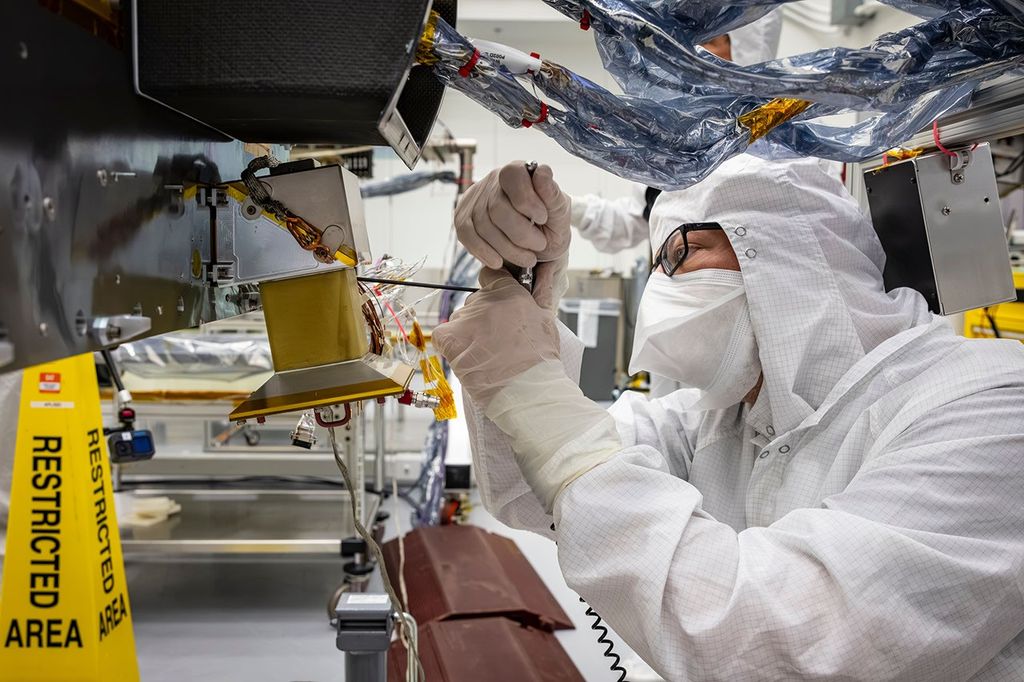
NASA announced on October 23 that Dragonfly had completed its first integrated, real-time flight simulation. At Johns Hopkins APL, the system used simulated camera and other sensor data to search for a landing site and descend.
It is worth separating the announcement from the scene it might conjure up: no drone was flying over Titan. Nor does this demonstrate that the entire mission is ready. The test examines how components work together before they must make decisions far from Earth.
Why rehearse a landing?
The mission will investigate Titan’s chemistry and habitability with a vehicle able to travel between different locations. NASA still lists launch for no earlier than 2028 and arrival for 2034.
An everyday comparison would be a driving simulator connected to a vehicle’s controls: it lets you rehearse responses without taking to the road. Here, the point is not a spectacular image, but whether the system interprets its inputs and responds coherently.
What to look for next
When following the project, distinguish between a simulation, a physical test and an actual flight. They answer different questions; none should automatically be presented as a substitute for the others.
It also helps to read those dates as a mission timeline, not a promise of imminent pictures. This milestone matters because it prepares the vehicle to operate autonomously, not because it brings its arrival forward.
Sources and context
Sources used for this article. Follow the links to read the original material.
See the linked sources for more information. Corrections and contact →