In brief
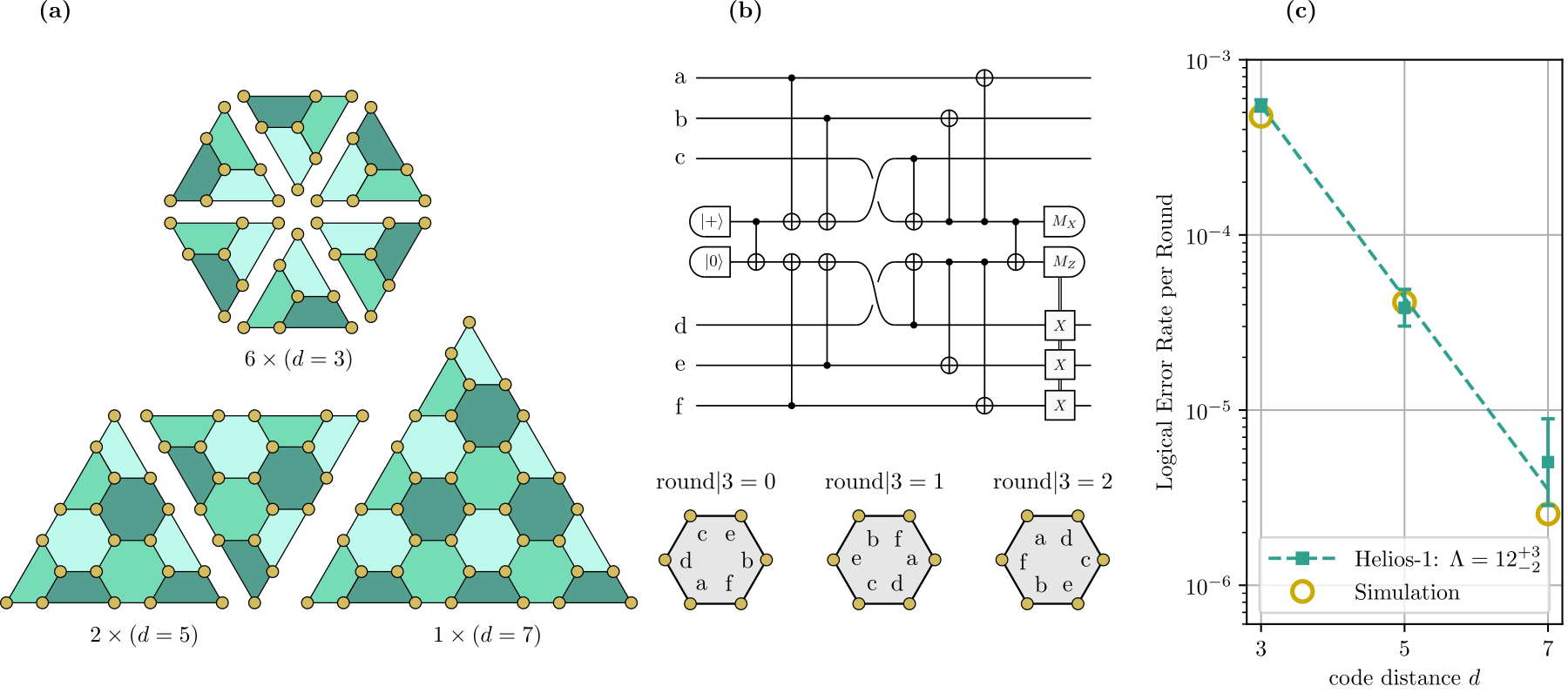
- The figure measures quantum memory errors per correction cycle.
- This is an experimental preprint, not a demonstration of an application running a million error-free operations.
- Apollo in 2029 remains a target, not an achieved result.
Five errors per million what?
On October 19, Quantinuum announced progress on one of quantum computing’s central challenges: preserving information without noise corrupting it. On its Helios processor, the team measured a logical error rate of around five per million correction cycles. That is equivalent to a memory fidelity of 99.9995%, but the unit matters.
Each cycle is a round of checks to detect errors. It is not the same as running a complete application, nor does it demonstrate a million useful operations without failure. The study, submitted to arXiv on October 16 as a preprint, describes memory experiments and specific tests of logical operations.
Error protection has a cost
A logical qubit protects information by distributing it across several physical qubits, in this case trapped ions. Redundancy makes it possible to correct certain errors, but it also requires additional operations that can cause others. Adding more components only helps when the hardware is reliable enough.
The researchers tested color codes with distances of 3, 5 and 7, with a larger distance offering greater protection. A fit to the experimental data showed that memory errors fell by a factor of nearly 12 between successive distances. That steady improvement is the important result.
An experiment, not yet a working application
The estimate still has statistical uncertainty: the reported interval is roughly three to nine errors per million. Tests of two-qubit Clifford operations used different code sizes and produced a different error rate. None of these figures, on its own, describes how a complete application performs.
Quantinuum links the work to Apollo, its planned universal fault-tolerant computer for 2029. That date remains a company target: scaling up and integrating the components still requires work. There is no new consumer device, local price or regional launch announced for Mexico. The news is a specific experimental improvement in reliability, not a promise of immediate benefits.
Sources and context
Sources used for this article. Follow the links to read the original material.
See the linked sources for more information. Corrections and contact →