In brief
- The initial rollout does not include Mexico.
- Each membership covers an individual show and its offer.
- Spotify says creators keep 90% of revenue.
A subscription to an individual show
Spotify began rolling out Memberships on October 20, letting podcasts offer paid access to exclusive content and perks. The launch covers 34 markets and is open to both Free and Premium users. Mexico is not on the initial list; Spain, the United States and Canada are.
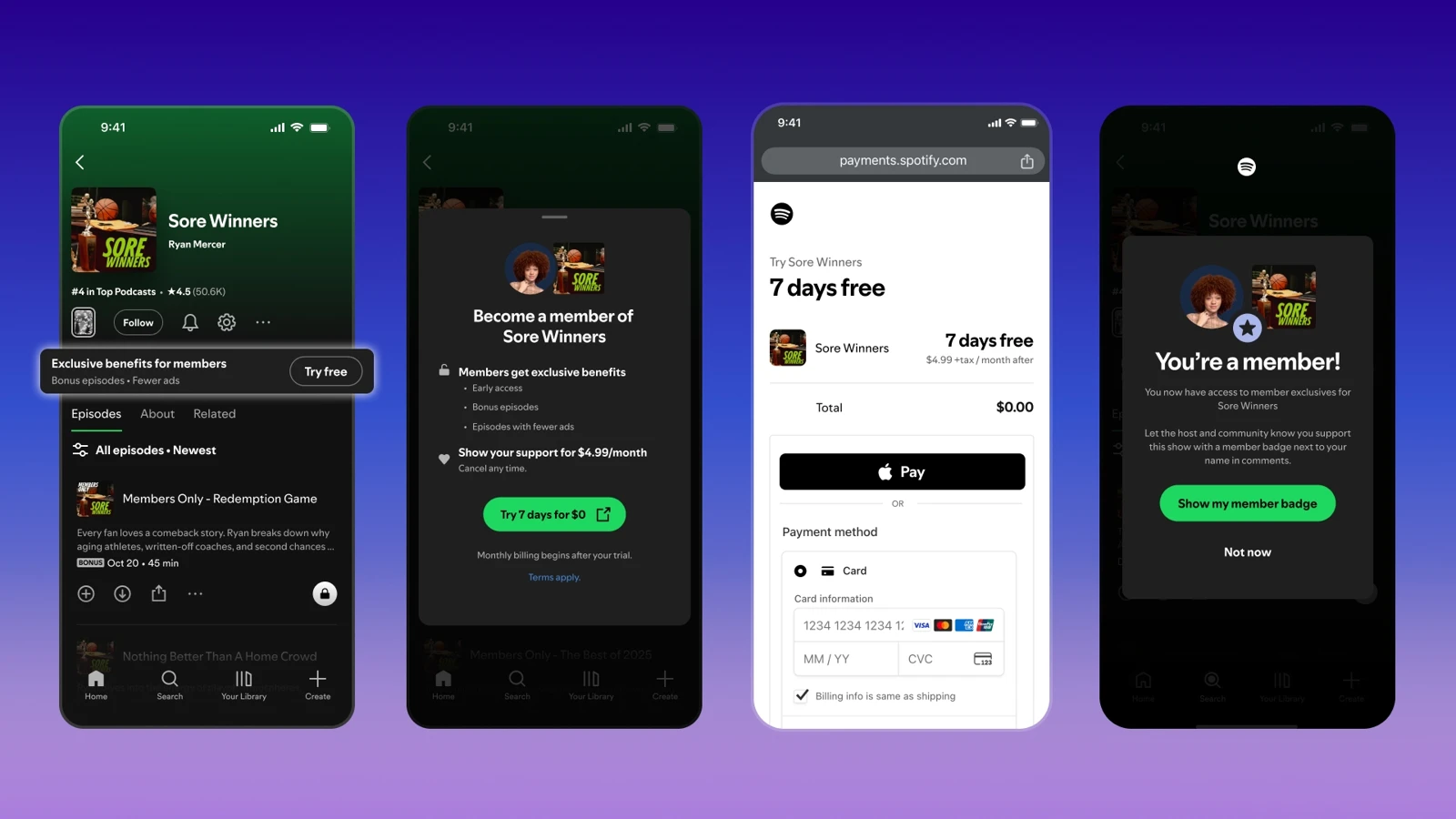
Each creator decides what to include and how to charge for it. They can set up access tiers, offer extra episodes or early releases and add community perks. Fans sign up and access the content within Spotify. This is separate from a subscription to the platform: you are paying for an individual show’s membership.
Creators keep 90% and connect more directly with fans
According to Spotify, creators keep 90% of revenue. The tool includes conversion analytics, promotions and free trials. Creators can also export member data, including email addresses shared voluntarily. That choice matters: joining a membership does not automatically authorize every use of your data.
The announced requirements include three published episodes, 100 listeners or viewers and 100 hours of listening or viewing on Spotify during the previous 30 days. The show must be hosted on Spotify for Creators or Megaphone and meet the eligibility conditions. These are minimum requirements, not a guarantee of income.
No launch date for Mexico yet
The announcement gives no launch date for Mexico. There is no standard price either: each show sets its own offer. A price shown in a screenshot helps explain the interface, but does not tell you what every membership costs or what the price would be in Mexico.
If you want to support a podcast once memberships become available, first check what extra content you get, how much you will pay on renewal and what happens when a trial ends. For creators, the question is what they can deliver consistently without weakening the episodes that attract new listeners.
Sources and context
Sources used for this article. Follow the links to read the original material.
See the linked sources for more information. Corrections and contact →