In brief
- The progress announcement was published October 20, 2026.
- Late 2028 remains a launch target.
The news is about making useful power
On October 20, 2026, NASA reported progress on SR-1 Freedom’s power module. Sierra Lobo will supply a closed-Brayton-cycle conversion system under a Glenn Research Center contract awarded in 2024. The reactor is the responsibility of the US Department of Energy’s Idaho National Laboratory.
It helps to separate two jobs: generating heat and turning it into usable electricity. This announcement concerns the second. It does not establish that the complete spacecraft has passed every test.
Electric propulsion, not a nuclear liftoff
The mission page describes electric propulsion powered by a fission reactor. Launch is targeted for late 2028, with arrival at Mars in 2029. These are planning targets, not dates from a journey that has already happened.
NASA says the reactor will remain inactive until the spacecraft leaves Earth orbit. The plan also includes carrying three SkyFall helicopters. This is not a consumer product or an invitation to book a trip.
How to read the next milestones
A contract, a component test and a mission in flight are different milestones. Think of building a house: having the electrical equipment does not mean the house is finished.
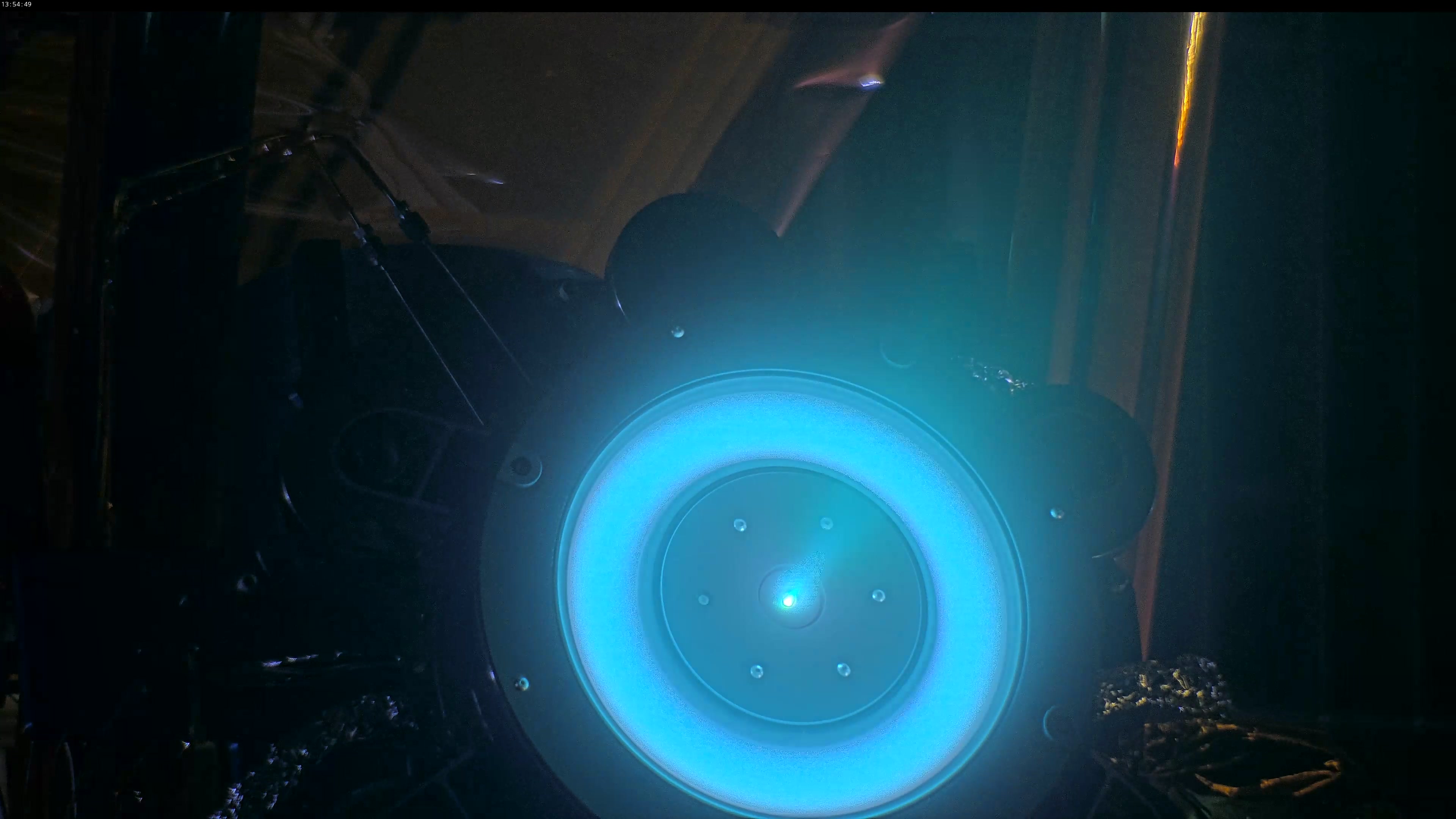
This article’s image is a frame from a real thruster test published on the mission page. It helps illustrate the technology, but it does not show SR-1 Freedom in flight or prove that its nuclear power module is ready.
Sources and context
Sources used for this article. Follow the links to read the original material.
See the linked sources for more information. Corrections and contact →